
Thai massage is a body therapy that combines pressure, stretching and mobilization to release tension, improve mobility and restore the body’s balance. More than a relaxing massage, it is a dynamic experience that brings lightness, openness and physical and mental well-being.
There are treatments that are received in silence, almost from stillness. And there are others that invite the body to participate, to move, to open up and to recover a sense of spaciousness that is often lost without realizing it.
Thai massage belongs to this second category.
It is not a conventional massage. It is not only based on sliding the hands over the skin or relaxing a specific area of the body. It is a complete, deep and dynamic body therapy, where the therapist combines pressure, stretching, mobilization and rhythm to accompany the body towards a state of greater balance.
So, if you have never tried it, it is normal to wonder what a Thai massage is like, what techniques are used and what actually happens during the session.
The answer does not fit only in a technical description. Because Thai massage is not only understood by what is done, but by how it feels.
How to prepare a Thai massage session
A Thai massage session begins before the first movement.
The first step is usually a brief conversation with the therapist. At this time, areas of tension, discomfort, injuries, special sensitivities or pressure preferences can be discussed. This information allows the treatment to be tailored to the actual needs of the individual.
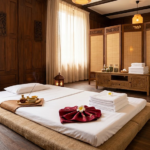
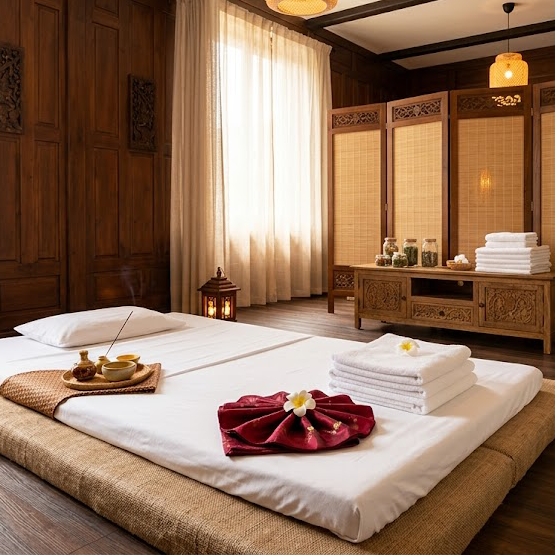
The body is then placed on the massage surface, usually dressed in comfortable clothing that allows free movement. No oils are used in traditional Thai massage, as the techniques are based on pressure, traction, stretching and mobilization.
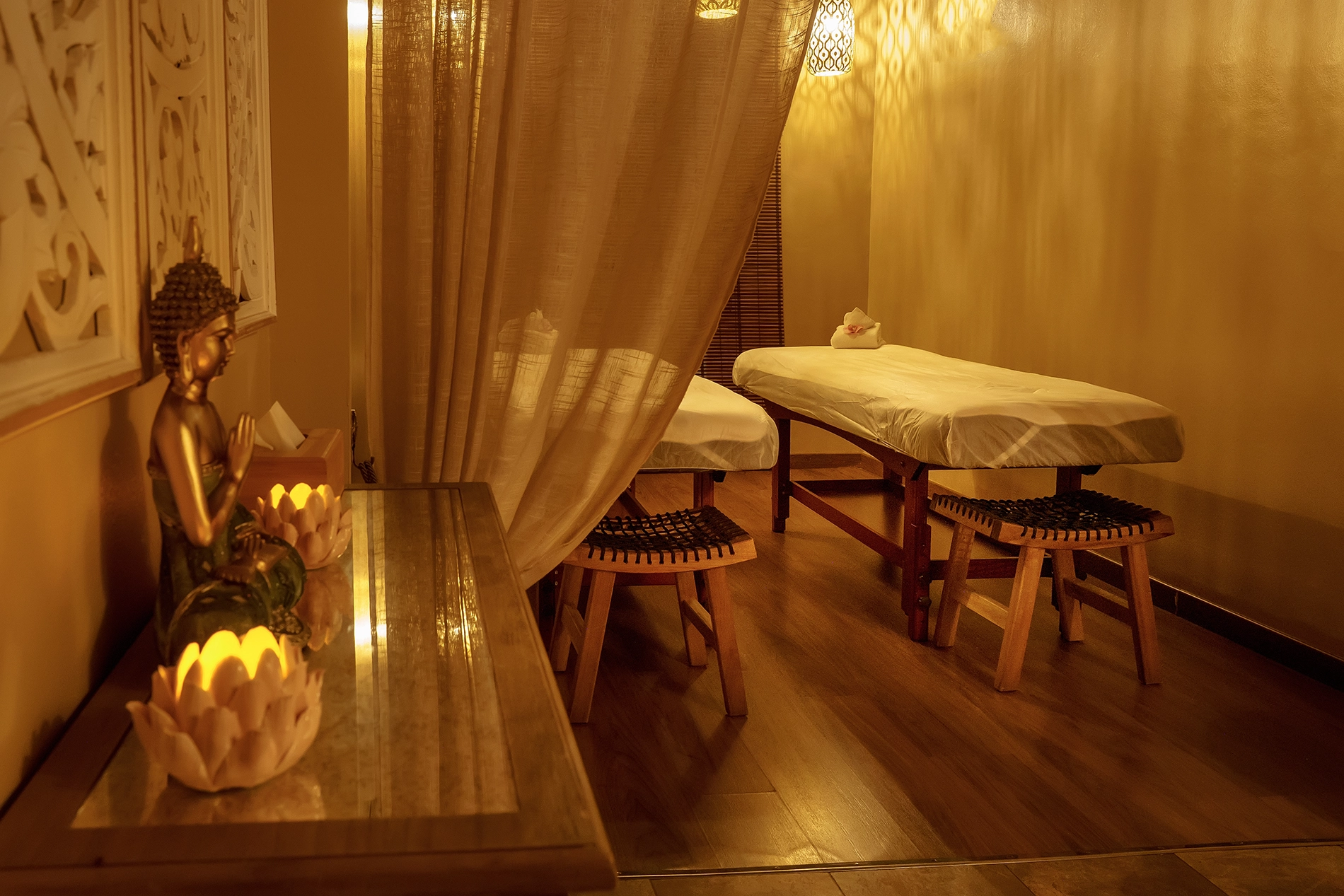
From the first minutes, the atmosphere invites you to slow down. Breathing begins to become more present. The body gradually leaves the rush out of the room.

First phase: contact and breathing
Thai massage does not start abruptly. Before working in depth, the therapist prepares the body.
The first movements are usually gentler and more rhythmic. They may include light palm presses, swaying or sustained contacts that help the person enter into the experience without tension.
This phase is important because it allows the body to trust. If the musculature is stiff, if there is accumulated stress or if the mind is still racing, the body needs a few minutes to release the initial resistance.
Breathing also begins to change. It becomes wider, slower, more connected to the sensations of the body.
Main techniques of Thai massage
Thai massage combines different techniques that are applied progressively. Each one has a specific function within the session.
Pressing with hands and thumbs
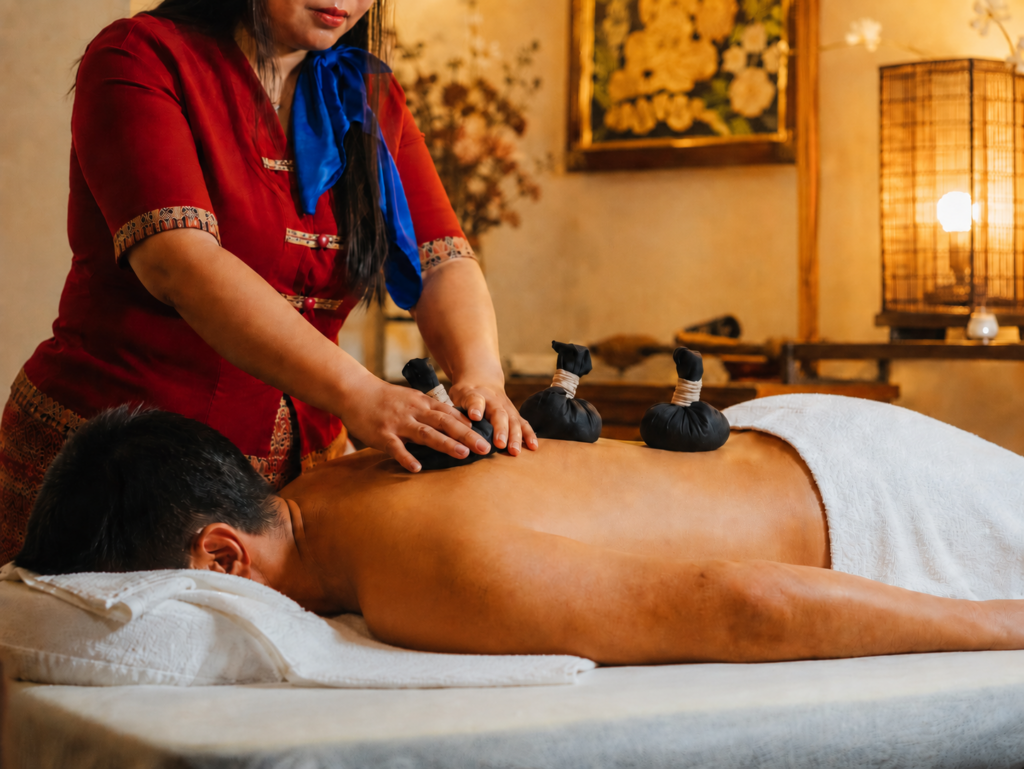
Pressures are one of the bases of Thai massage. The therapist uses hands, thumbs and palms to apply pressure on specific areas of the body.
These pressures help to relax the musculature, activate circulation and release accumulated tension points. They are applied gradually, adapting the intensity to the state of the body and the sensitivity of the person.
It is not about pressing for the sake of pressing. Pressure has rhythm, direction and intention. It is looking for the body to respond, not to defend itself.
Work on energy lines
In the Thai tradition, the body is traversed by energy lines known as Sen lines. During the massage, the therapist works on these lines through pressure and movement.
This approach seeks to promote energy flow, unblock areas of rigidity and restore a sense of overall balance.
Although each person experiences it differently, many describe this part of the massage as a feeling of deep activation: the body feels more awake, lighter and more connected.
Joint mobilizations
Thai massage also includes gentle movements on joints such as ankles, knees, hips, shoulders, wrists and neck.
These mobilizations help to release stiffness, improve range of motion and restore fluidity to areas that are often blocked by posture or lack of movement.
The movements are controlled, progressive and always adapted. The objective is not to force, but to accompany the body towards greater freedom.
Assisted stretching
Stretching is one of the most recognizable parts of Thai massage.
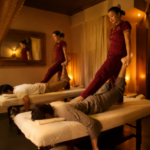
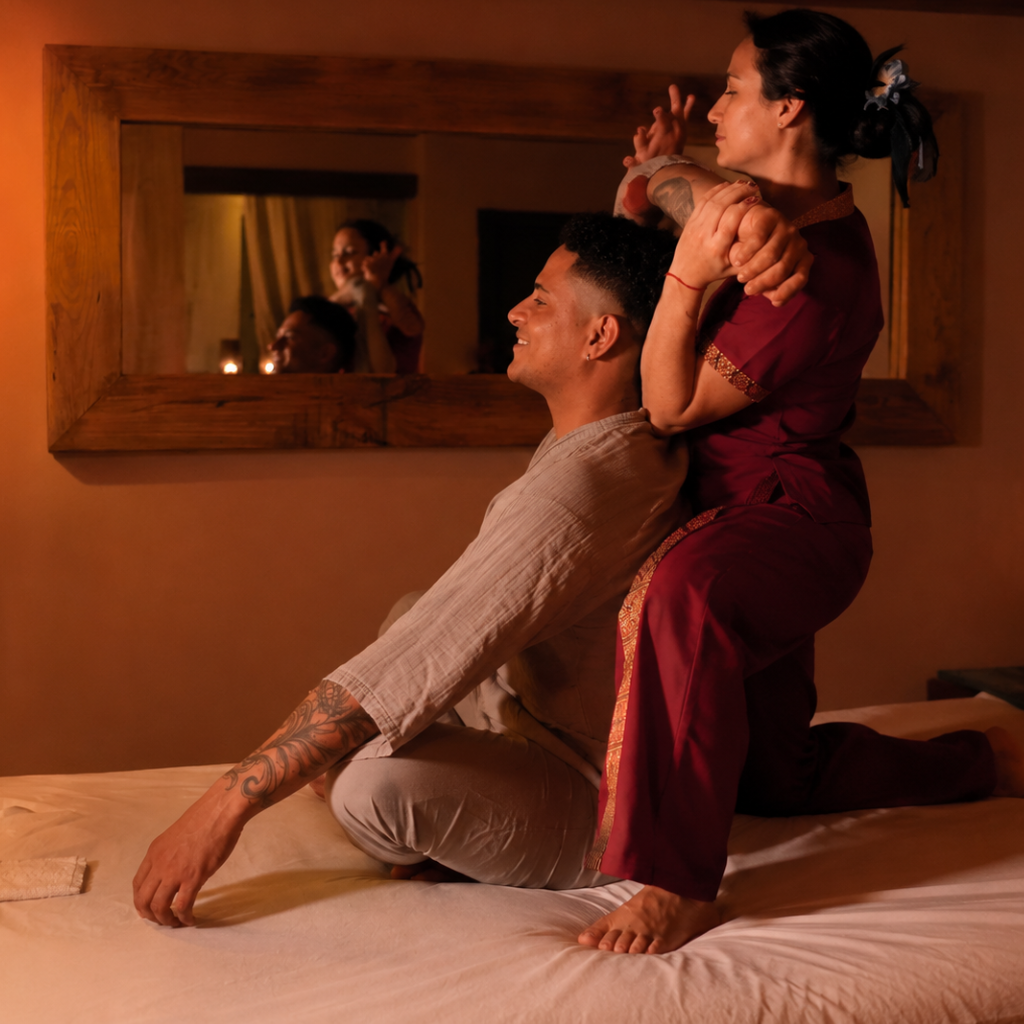
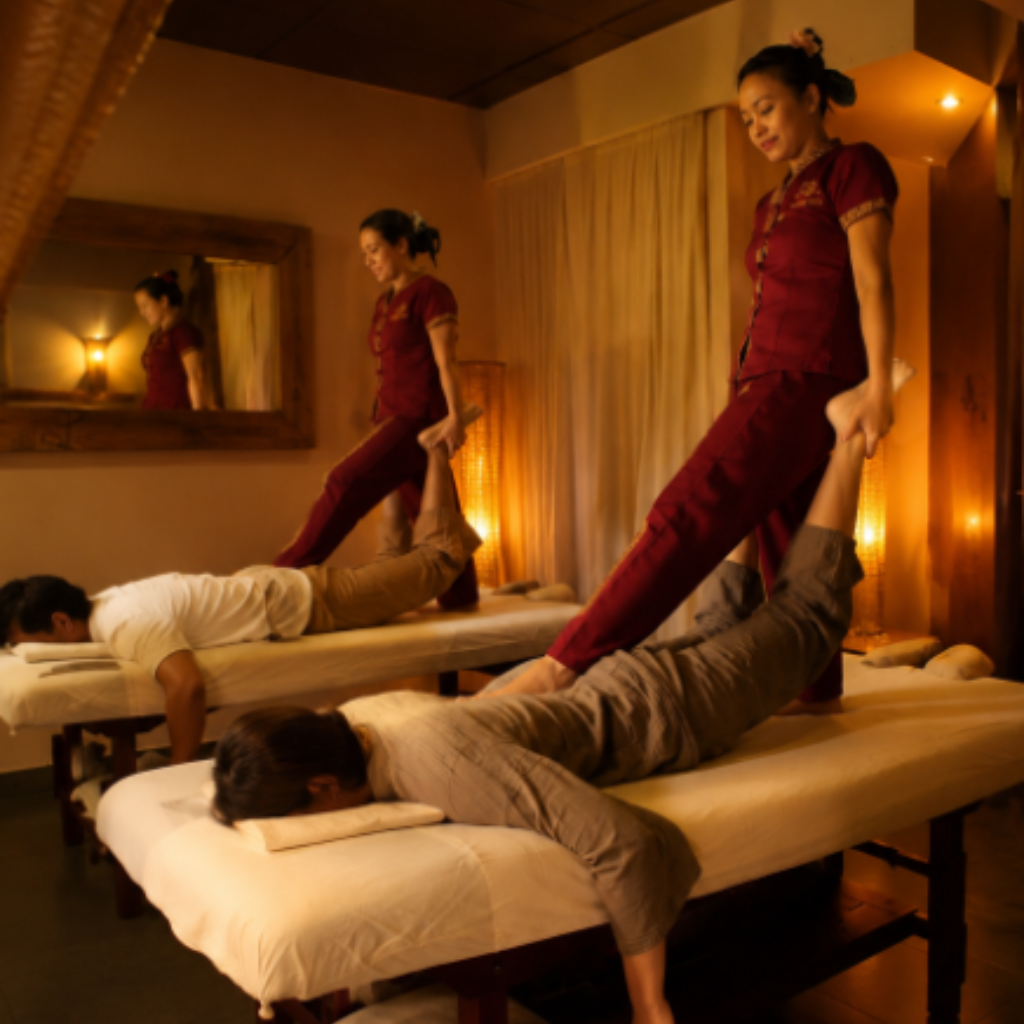
The therapist guides the body through postures that help to stretch legs, back, hips, arms and shoulders. The person receiving the massage does not have to make any active effort: he/she simply allows him/herself to be accompanied.
These stretches may remind some yoga positions, but with an important difference: here the body is supported by the therapist. This allows to reach a softer, deeper and safer opening.
What stretches are performed during a Thai massage?
Thai massage stretches are always adapted to the body of each person. No single session is the same for everyone, because each body comes with a different story: more stiffness, more fatigue, more mobility or more accumulated tension.
Even so, some key areas are usually worked on.
Leg stretches
Legs accumulate much more than they seem to. Hours of standing, sedentary lifestyles, physical activity or poor circulation can cause heaviness, stiffness and fatigue.
During the session, the therapist may perform hamstring, calf, quadriceps and hip stretches. These movements help to free the lower body and improve the feeling of lightness.
Hip opening
The hips are one of the areas where stiffness accumulates the most, especially in people who spend many hours sitting.
Thai massage works this area with mobilizations and stretches that seek to recover amplitude. When the hips are released, it often also improves the sensation in the lower back and overall posture.
Back stretching
The back is usually one of the main protagonists of the session. Through pressure, gentle twisting and guided stretching, the therapist helps to release tension in the dorsal, lumbar and cervical areas.
These movements can provide a very deep sense of opening, as if the spine is regaining space.
Shoulder and arm stretches
The shoulders tend to carry tension from stress, posture and constant use of screens. During the massage, you can work with pressures, rotations and stretches that help release the upper body area.
At the end, it is common to feel the shoulders lower, the neck freer and the breathing wider.
What happens during the session step by step
Although each therapist can tailor the experience, a Thai massage session usually progresses in a progressive manner.
First, the body comes into contact with the rhythm of the massage. The initial pressures help to prepare the musculature and relax the nervous system.
Afterwards, the work becomes deeper. The therapist goes through different areas of the body, applying pressure on specific points and energy lines. In this phase, the most accumulated tension begins to be released.
This is followed by mobilization and stretching. The body gradually opens up, the joints regain movement and breathing accompanies the process.
Finally, the session closes with slower movements, allowing the body to integrate all the work done.
The result is a gradual transition: from rigidity to amplitude, from tension to lightness, from control to confidence.
Conclusion
To wonder what a Thai massage is like is to open the door to an experience that goes beyond conventional relaxation.
- It is pressure, but it also listens.
- It’s stretching, but it’s also careful.
- It is movement, but also calm.
During the session, the body is accompanied step by step: it is prepared, mobilized, stretched, released and finally integrated. Each technique has an intention and each movement seeks to restore a sense of balance to the body.
Thai massage not only relaxes the muscles. It helps to regain space, mobility and presence. It reminds the body that it can let go, open up and return to its own rhythm.
And maybe that’s why, when it’s over, the feeling is not just having received a massage. It is to have returned a little more to oneself.
Book a Consultation
It’s easy and free!
Tags:Hair Spa