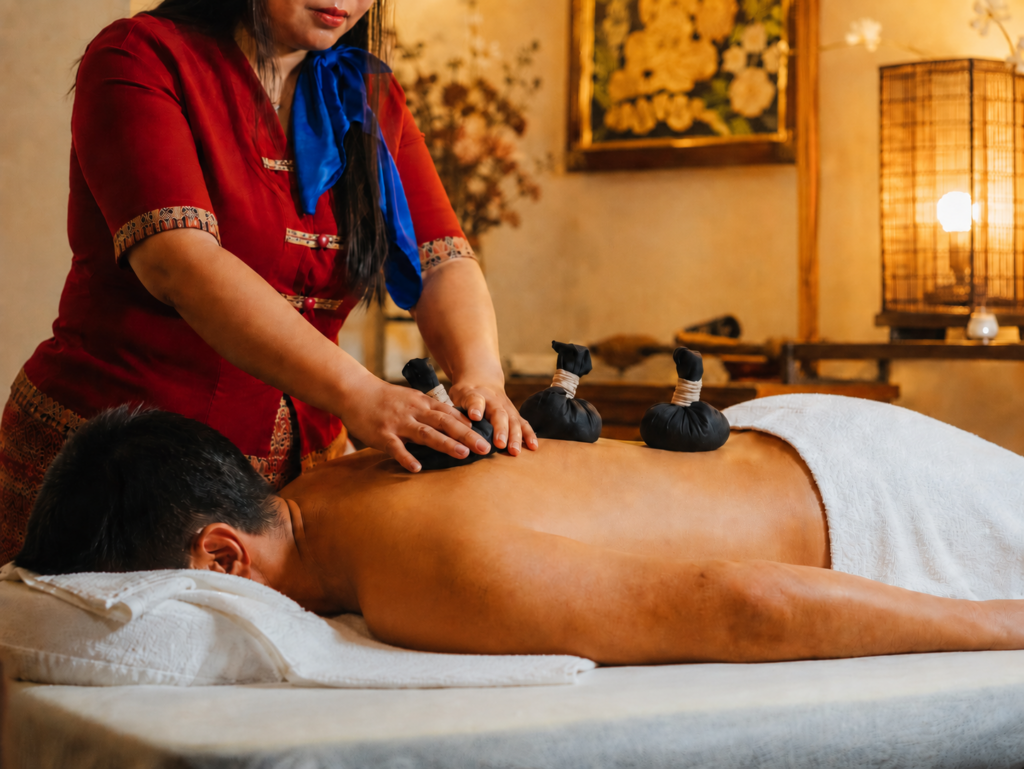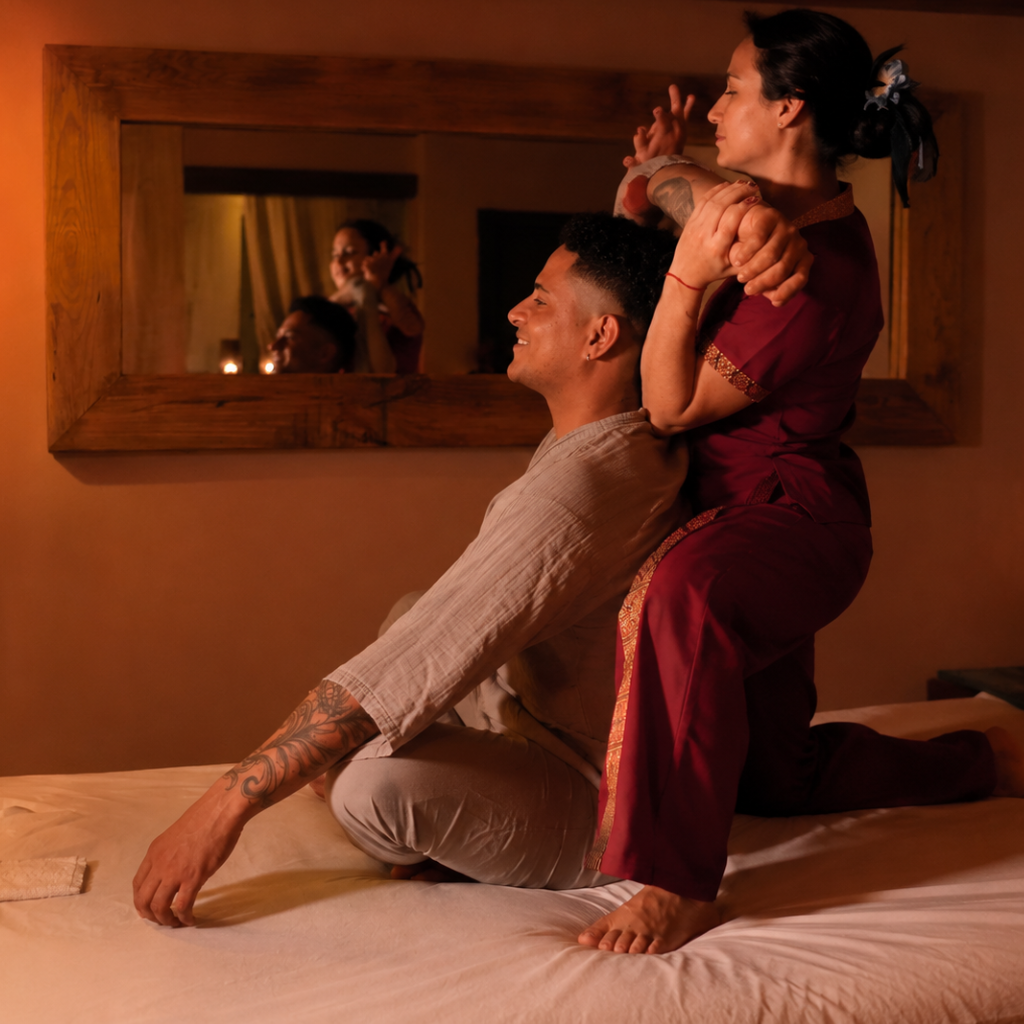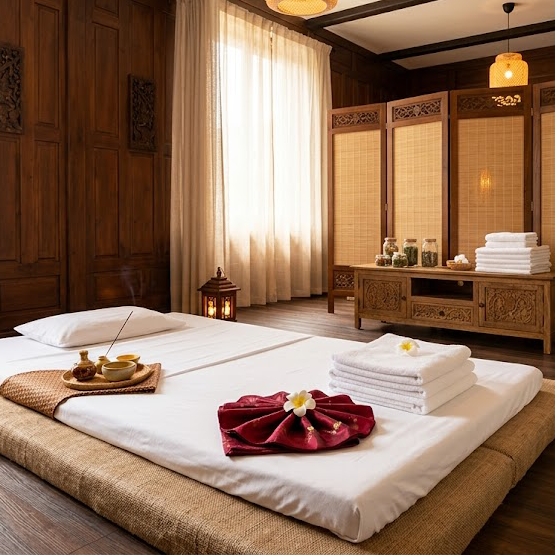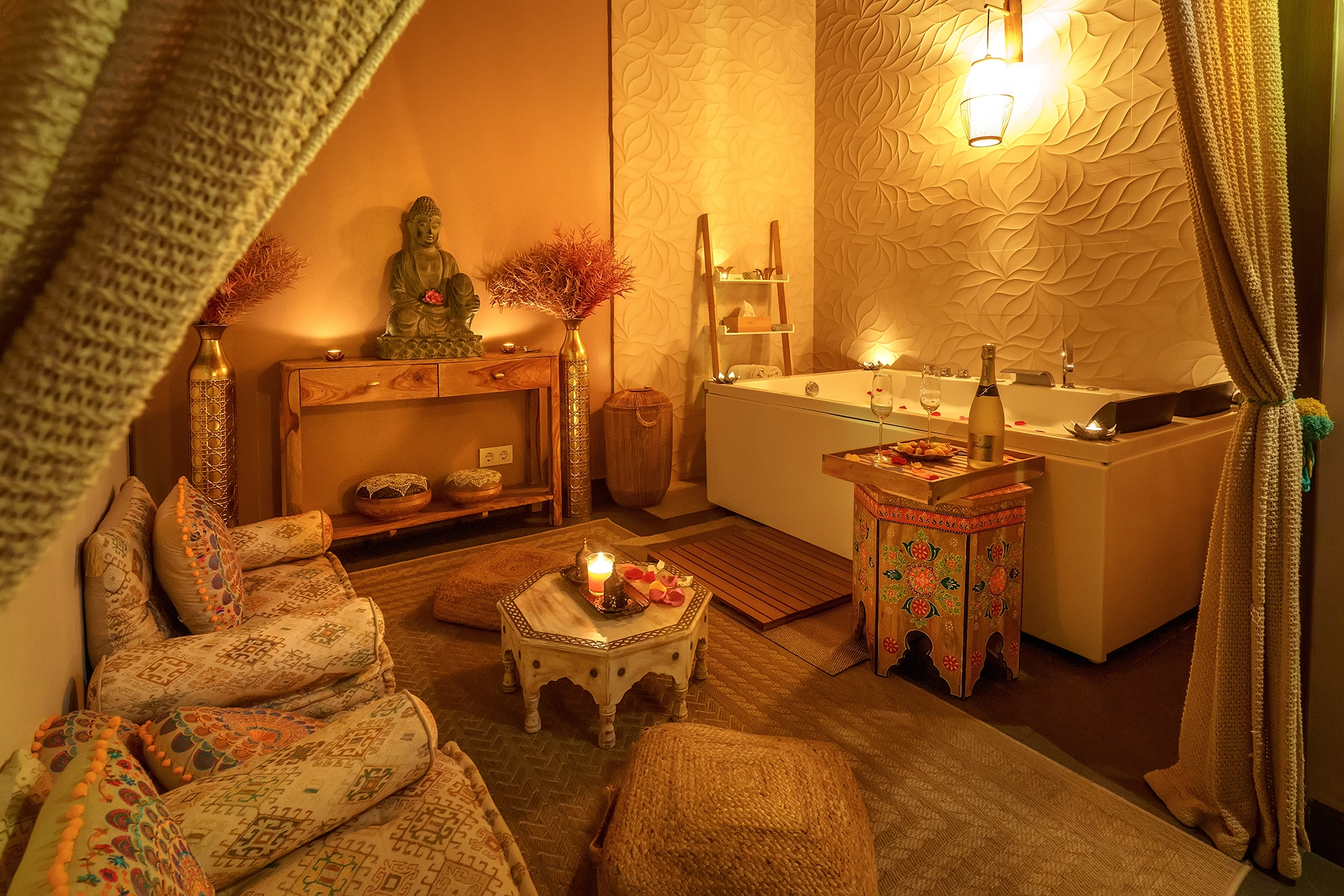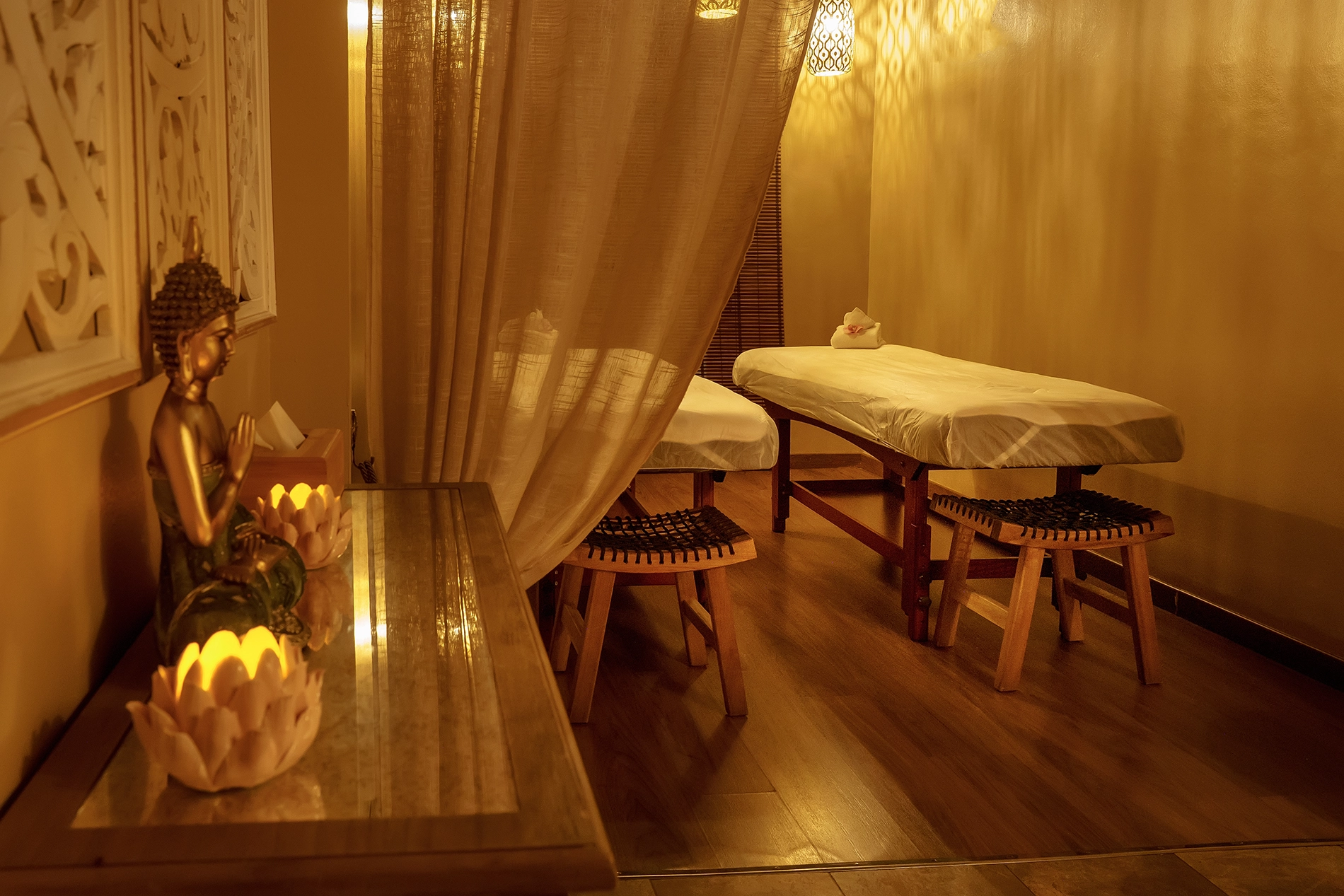

Thai massage is not measured only in minutes, but in the rhythm the body needs to release tension, recover mobility and enter a state of calm. A progressive experience that can last 60, 90 minutes or more, depending on each person’s needs.
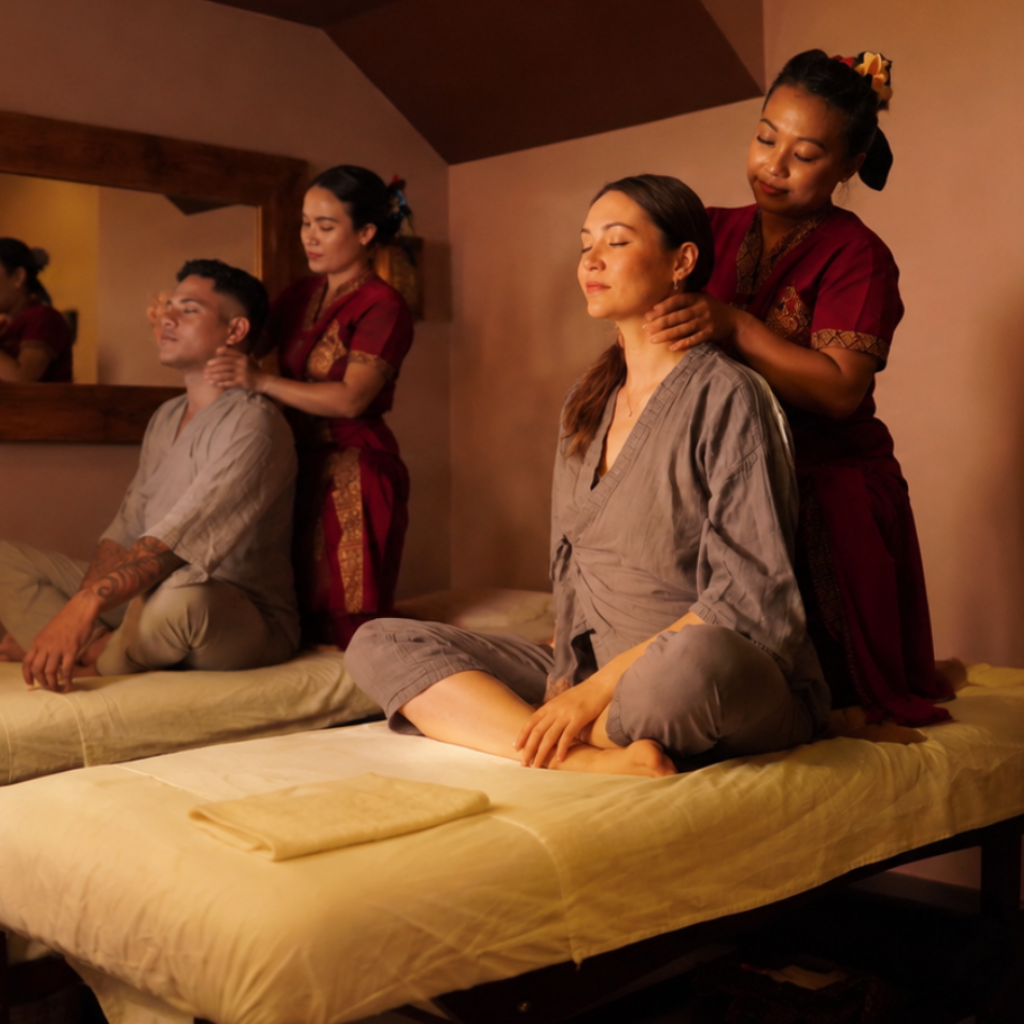
There are experiences that should not be measured only in minutes. A Thai massage is not simply a treatment with a start time and an end time. It is a gradual journey in which the body moves from tension to openness, from stiffness to lightness, from mental noise to deeper calm.
Still, when someone books for the first time, it is normal to wonder how long a Thai massage really lasts, what happens during the session and how much time the body needs to receive all its benefits.
The answer depends on the type of massage, the intensity of the treatment and each person’s needs. But beyond the exact duration, what matters is understanding how a session unfolds and why each phase has its own rhythm.
How long does a Thai massage last?
The usual duration of a Thai massage is typically between 60 and 90 minutes, although there are also shorter treatments or longer experiences designed for deeper relaxation.
A 60-minute session allows the body to be worked on in a general way, relieving main tensions and offering a complete first experience. It is a good option for those who want to disconnect, release tight areas and recover a sense of wellbeing without having too much time available.
A 90-minute session allows for slower, deeper work. The therapist can devote more attention to specific areas such as the back, neck, shoulders, legs or lower back, and the body has more time to adapt to the pressure and stretching.
When the treatment extends beyond 90 minutes, the experience becomes more immersive. The massage stops being only a body therapy and becomes a more complete ritual of disconnection.

Why Thai massage needs time
Thai massage does not work like a quick intervention on an isolated area. Its essence lies in treating the body as a connected system.
Tension in the back may be related to stiffness in the hips. Discomfort in the shoulders may come from many hours in front of a computer. A feeling of heavy legs may be linked to circulation, posture or accumulated fatigue.
That is why Thai massage needs time to move through the body, detect points of tension and guide the muscles towards a more open state.
The therapist does not only apply pressure. They observe, adapt the rhythm, mobilise, stretch and listen to how the body responds. Every minute has a purpose: to prepare, release, integrate and relax.
How a Thai massage session begins
Before the treatment starts, there is usually a first moment of welcome. This phase may seem simple, but it is important in order to adapt the experience to each person.
The therapist may ask whether there is any particularly tight area, injury, sensitivity, discomfort or pressure preference. This is also the moment to mention whether you are looking for a more intense, more relaxing experience or one more focused on releasing accumulated tension.
In traditional Thai massage, the treatment is usually carried out with comfortable clothing, without oils and on a surface prepared to facilitate movement and stretching. Unlike other more passive massages, here the body participates, although always guided by the therapist.
From the beginning, the session invites you to slow down. Breathing starts to become more present and the body prepares to let go.
First phase: preparing the body
The first few minutes are usually dedicated to preparing the muscles. The therapist begins with soft, progressive pressure so that the body comes into contact with the treatment without resistance.
This phase is especially important when the person arrives with a lot of stress, stiffness or accumulated tension. If the body is in a state of alert, it needs time to trust, soften and allow the work to go deeper.
The initial pressure helps activate circulation, warm the tissues and open the way towards the areas where tension is concentrated.
It is not about going fast. It is about creating the conditions for the body to receive.
Second phase: deep pressure and tension release
Once the body is prepared, the massage moves towards deeper work. In this phase, the therapist may use hands, thumbs, forearms or elbows to apply pressure to specific areas.
The aim is to release accumulated tension, relax the muscles and unblock areas that have lost mobility due to stress, posture or physical effort.
The most commonly worked areas are:
- Back
- Neck.
- Shoulders.
- Lower back.
- Legs.
- Feet.
- Arms.
The pressure should not feel like aggressive pain, but rather like controlled intensity. There may be more sensitive points, especially if there is accumulated tension, but the work should always remain within a comfortable and safe limit.
In this phase, many people feel the body slowly beginning to let go. The muscles release, breathing expands and a deeper feeling of rest appears.
Third phase: stretching and mobility
One of the most characteristic parts of Thai massage is assisted stretching. That is why it is often described as a form of passive yoga.
The therapist guides the body through controlled movements that help improve flexibility, release the joints and restore range of motion.
These stretches may work the legs, back, hips, shoulders and arms. They are not meant to force, but to accompany. The body does not need to make an effort; it simply lets itself be guided.
This phase often brings a very particular sensation: as if the body were recovering space. Stiffness decreases, the joints feel freer and posture seems lighter.
Fourth phase: integration and final calm
After the deep work and stretches, the session usually closes with slower movements. This is the moment when the body integrates everything it has received.
The intensity decreases. The rhythm becomes more enveloping. Breathing stabilises. The nervous system begins to enter a calmer state.
This final part is essential because it allows the treatment not to end abruptly. The body needs a few minutes to move from mobilisation to stillness, from release to a feeling of rest.
Many people describe this moment as a pleasant, heavy calm, a mix between deep relaxation and renewed energy.
Is a 60-minute Thai massage enough?
A 60-minute Thai massage can be enough if the goal is to disconnect, relax the body and work on general tension.
It is a good option for a first experience, for people with little time or for those who want to incorporate massage as a regular wellbeing ritual.
However, if there is a lot of stiffness, chronic tension or specific areas that require more attention, a 90-minute session may be more advisable. That extra time allows the work to be done with less rush and to go deeper without the body feeling forced.
In wellbeing, more time does not always mean more intensity. Sometimes it means more care.
When should you choose a longer session?
A longer session may be ideal when the body feels especially overloaded or when you are looking for a more complete experience.
Choosing more time may be recommended if:
- There is accumulated tension in several areas of the body.
- You are looking for deeper work on the back, neck or shoulders.
- There is stiffness from spending many hours sitting or standing.
- You want to combine relaxation with mobility.
- You want to experience the session with more calm.
- It is a moment of intense stress or prolonged fatigue.
Thai massage needs rhythm. When there is more time, the therapist can build the session with greater precision and the body can respond more gradually.
Difference between treatment duration and experience time
When booking a massage, people often think only about the duration of the treatment. But the full experience begins before and ends after.
Arriving a few minutes early helps you enter the space without rushing. Changing pace, preparing yourself, breathing and leaving the noise of the day outside are part of the ritual.
Likewise, when the massage ends, it is best not to leave in a hurry. The body needs a few moments to come back, get up and preserve that feeling of calm.
That is why, even if the massage lasts 60 or 90 minutes, the real experience may feel broader. Not only because of the time, but because of the state it leads you to.
How to know which duration to choose
The best duration depends on what the body needs at that moment.
If you are looking for a restorative pause, to relieve general tension and disconnect from everyday life, a 60-minute session can be a very good choice.
If your body feels very overloaded, you have several tense areas or you want a more complete experience, 90 minutes can offer deeper and more balanced work.
If what you want is to turn the massage into a true wellbeing ritual, a longer experience can help you enter a fuller state of disconnection.
The key is to listen to the body. Sometimes it asks for relief. Sometimes it asks for pause. And other times it asks for time.
Conclusion
Asking how long a Thai massage really lasts is also asking how much time the body needs to let go.
A session may last 60, 90 minutes or more, but its effect is not limited to the clock. The true value of Thai massage lies in how it guides the body from tension towards calm, from stiffness towards movement, from rush towards a deeper sense of presence.
Each phase has its purpose: to prepare, press, stretch, release and integrate. That is why, more than an exact duration, Thai massage needs the right rhythm.
Because when the body finally finds a space to stop, time stops being just time. It becomes care.
Book a Consultation
It’s easy and free!
Tags:Hair Spa